China's Startup Renaissance: AI, Robots and Billions — The 2026 Awakening
$2 billion raised in a single round. 80% of a global market dominated from Beijing. 60% of all Asian venture capital absorbed in one quarter.
The numbers coming out of China in spring 2026 tell a clear story. After years of headwinds — economic slowdown, regulatory crackdowns on tech giants, subdued investor sentiment — China's startup ecosystem is reinventing itself at full speed. Here's a close look at a revival that could reshape the global technology landscape.
A Record Quarter: China Leads Asia's Startup Funding Comeback
The scale of the rebound becomes clear when you look at Crunchbase data published in early April 2026. In the first quarter of the year, Chinese startups raised an estimated $16.5 billion — representing 60% of all startup funding across Asia. The region as a whole hit $27.4 billion for the quarter, the highest level in over three years, up 20% from the prior quarter and nearly double year-ago levels.
This is not a one-off bounce. It marks the third consecutive quarter of rising venture investment in China, following a multi-year low in the first half of 2025. What stands out is the concentration of capital: larger rounds are dominating, driven by well-identified players in AI and robotics.
 Source: Wikimedia Commons — Shinewood, CC BY-SA 3.0
The dominant sectors? Artificial intelligence leads by a wide margin. Asian AI-related startups pulled in roughly $11.2 billion in Q1 — a record high. Generative AI, foundation models, agentic AI and intelligent robotics are at the heart of the surge. And within this boom, China is capturing the largest share by far.
Moonshot AI: The Quiet Champion of Open-Source AI
Among the names that have dominated sector headlines, Moonshot AI stands out with particular force. The Beijing-based lab closed a $2 billion funding round at a $20 billion valuation in May 2026 — led by Long-Z Investments, the venture arm of food delivery giant Meituan, with participation from Tsinghua Capital, China Mobile and CPE Yuanfeng.
What makes Moonshot's story remarkable is the sheer speed of its rise. Founded in 2023 by Yang Zhilin, a former Meta AI and Google Brain researcher, the startup was valued at just $4.3 billion at the end of 2025. In six months, it raised a total of $3.9 billion and saw its valuation multiply fivefold. Its flagship model, Kimi K2.6, is currently the second most-used LLM on OpenRouter, the popular open-model distribution platform. Annualized recurring revenue topped $200 million in April 2026.
Moonshot's success illustrates a striking paradox: Chinese AI labs have far fewer financial resources than their American rivals (OpenAI just raised $122 billion in a single round), yet their open-weight strategy — releasing capable models as open source — allows them to capture massive global demand. Cheaper to run and nearly as capable, Chinese models are winning over developers worldwide.
The trend extends well beyond Moonshot. DeepSeek, arguably the most talked-about Chinese AI lab following its technical breakthrough in early 2025, is reportedly in negotiations to raise outside capital for the first time at a valuation of around $45 billion. Two other Chinese AI startups have already gone public: Zhipu AI (rebranded Knowledge Atlas Technology) debuted on the Hong Kong exchange with a market cap of $55.9 billion, while MiniMax is now valued at $33 billion on the same market.
Linkerbot: The Startup Holding the World in Its (Robot) Hands
If Moonshot represents the language model revolution, Linkerbot embodies an equally strategic dimension: dexterous robotics. This Beijing-based startup has emerged as the undisputed global leader in high-degree-of-freedom robotic hands, controlling roughly 80% of the world market in this highly specialized niche.
In May 2026, Linkerbot announced the close of a "Series B+" round that valued the company at $3 billion — officially placing it in the unicorn club. Shortly after, the company said it was targeting a $6 billion valuation in its next funding round. Demand is surging, driven by the boom in humanoid robots: manufacturers need hands capable of manipulating objects with near-human precision, and Linkerbot has become the go-to supplier for the entire industry.
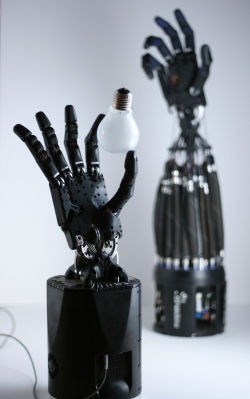 Source: Wikimedia Commons — Shadow Robot Company, CC BY-SA 3.0
This dominance is no accident. China has a natural home-field advantage in humanoid robotics: according to a report published in April 2026, 90% of the world's humanoid robots are now manufactured in China. The country has an integrated supply chain, a skilled workforce, competitive costs — and above all, massive and coordinated state support behind the sector.
The State as Co-Investor: China Plays the Long Game
What fundamentally distinguishes China's startup ecosystem from its Western counterparts is the structured presence of the state as a financing actor. In 2026, China activated a national venture capital guidance fund of $138 billion targeting embodied AI, robotics, and breakthrough technologies. This is not a subsidy program: it is a mechanism designed to steer private capital toward strategic priority sectors.
This approach creates both strengths and tensions. On one hand, Chinese startups benefit from an invisible safety net that allows them to take bold risks and scale rapidly. On the other, it raises legitimate questions for international trading partners about the terms of fair competition.
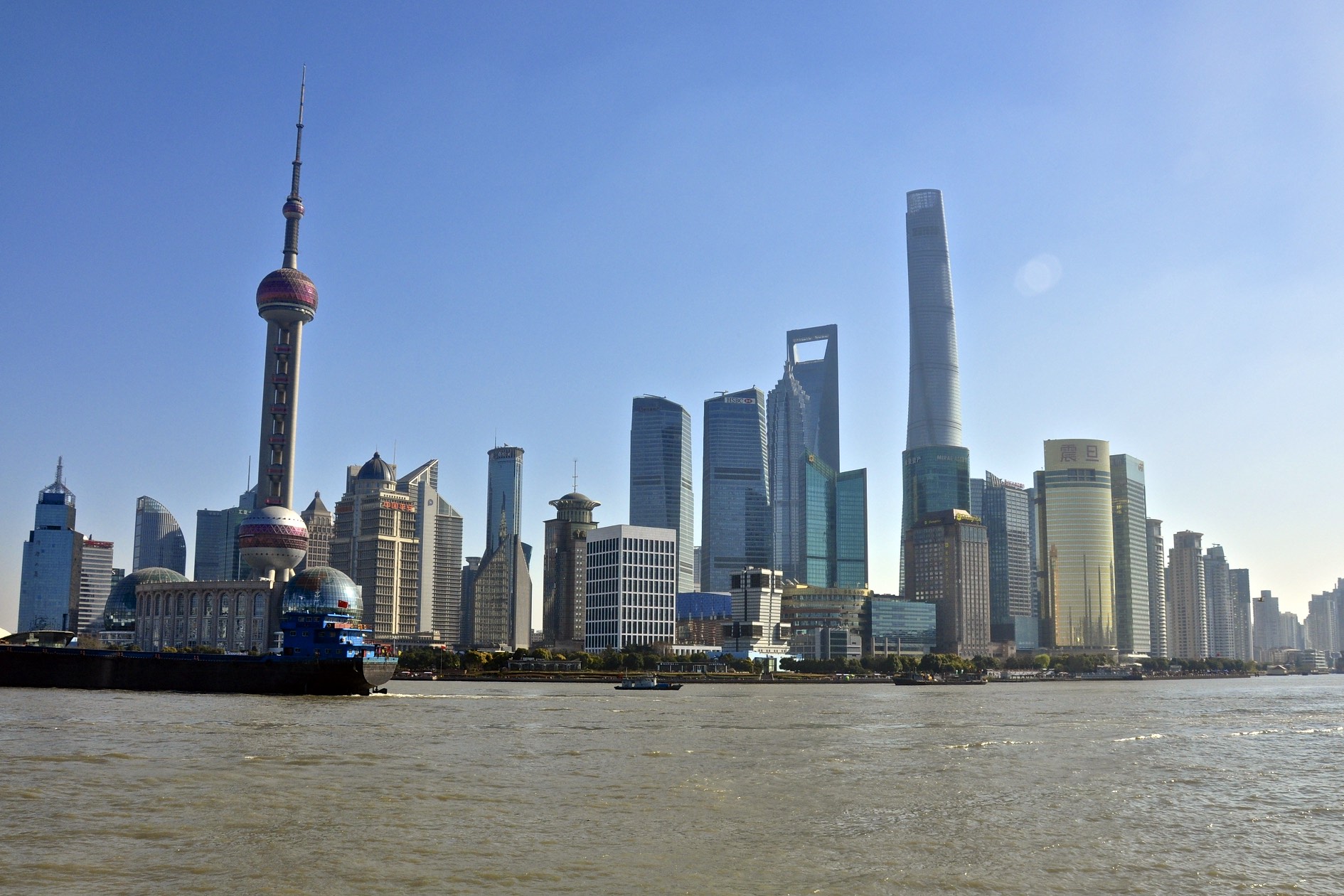 Source: Wikimedia Commons — Simon Desmarais, CC BY-SA 2.0
For international investors, the dilemma is real: the return potential is undeniable, but geopolitical risks — tech restrictions, US-China tensions — remain unpredictable variables. Yet funds like HongShan (formerly Sequoia China), IDG Capital, and Meituan have maintained their positions and continue backing the country's top startups.
What This Means for the Rest of the World
China's startup resurgence in 2026 reveals several deep structural dynamics:
- Open-source as a competitive weapon: facing the overwhelming financial resources of American rivals, Chinese AI labs have bet on openness to capture global market share.
- Robotics as the next battleground: generative AI was the 2023-2025 cycle; physical, intelligent robotics is the 2026-2030 story.
- Vertical integration as competitive advantage: startups like Linkerbot don't just make components — they build ecosystems.
- Hong Kong as a new exit route: listings on the Hong Kong exchange offer Chinese startups a credible alternative to the Nasdaq amid persistent geopolitical tensions.
The resurgence also raises a fundamental question for Western tech players: can you afford to ignore Chinese open-source models without falling behind? The global adoption numbers for Kimi and DeepSeek on major developer platforms suggest the answer is no.
Conclusion: A Scene in Full Reinvention
2026 marks a turning point in the history of Chinese startups. After years of regulatory crackdowns (2021-2023) and economic stagnation (2024-2025), the country is finding its stride again with surprising vigor. Tens of billions injected, new unicorns minted, successful IPOs, and startups that now compete technically with the best in the world.
The real question is no longer "can China innovate?", but "how far will this wave go — and who will be able to ride it?"